byron-regen-co
GHK-Cu
GHK-Cu
Couldn't load pickup availability
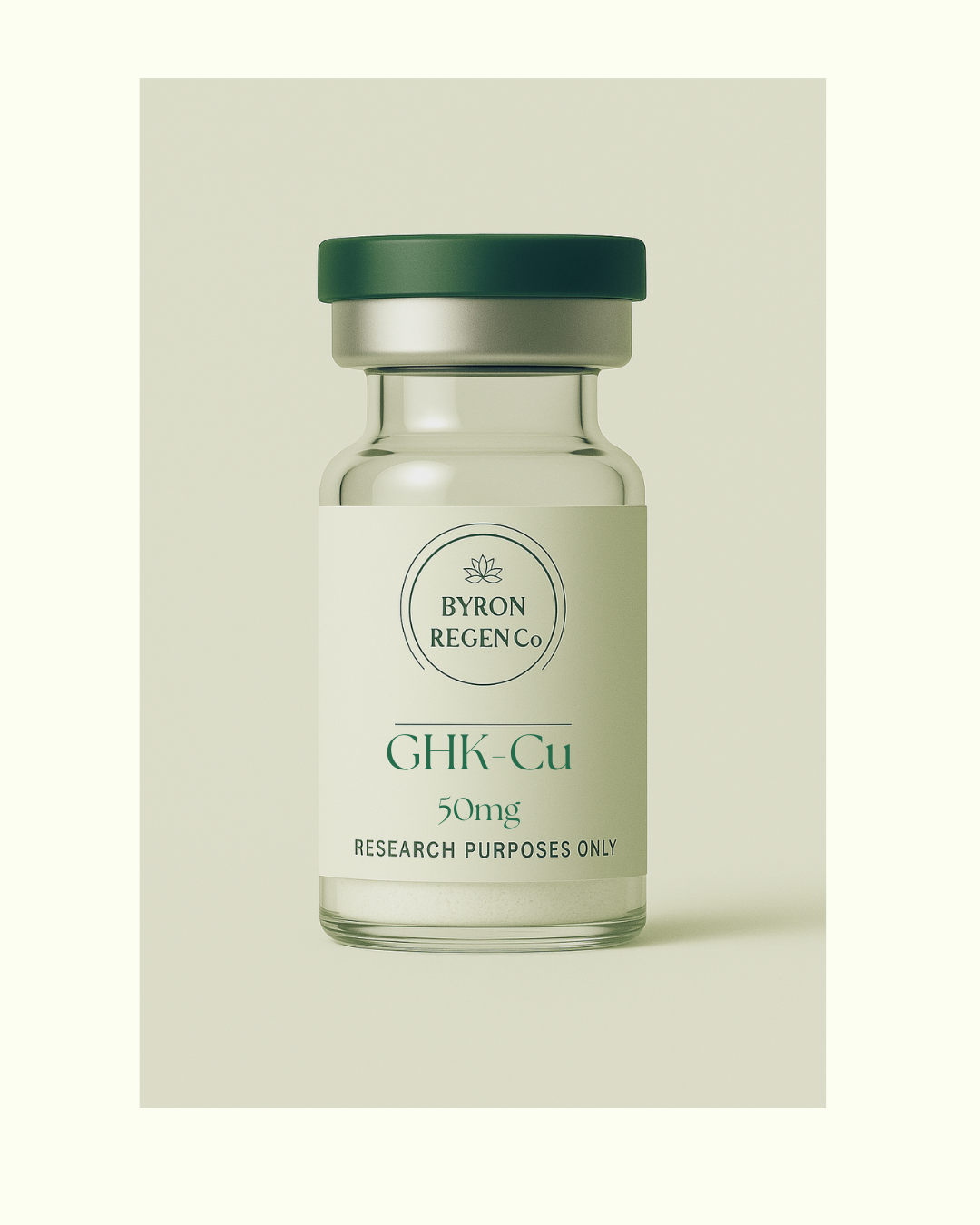
GHK-Cu (50mg)
For laboratory research use only. Not for human consumption.
Key benefits
· Widely used in research models investigating skin firmness, texture and visible ageing.
· Studied for its potential to support collagen, elastin and extracellular matrix components in laboratory settings.
· Frequently utilised in hair and follicle research exploring density, thickness and scalp appearance.
· Investigated for its antioxidant and anti-inflammatory properties in cellular and tissue models.
· Suitable for controlled in-vitro and in-vivo experiments requiring a copper-binding tripeptide.
GHK-Cu (glycyl-L-histidyl-L-lysine copper) is a naturally occurring copper-binding tripeptide that has been widely investigated in cosmetic and experimental research settings. Studies have explored its role in models of skin repair, collagen support, hair and follicle biology, and cellular stress responses. Current research focuses on how GHK-Cu may influence extracellular matrix remodelling, antioxidant pathways and visible signs of ageing in controlled in-vitro and in-vivo laboratory systems.
GHK-Cu is supplied as a lyophilised (freeze-dried) powder in a sterile glass vial. Researchers can reconstitute the powder using a suitable laboratory-grade diluent for controlled experimental applications.
Product details
· Quantity: 50mg lyophilised peptide powder
· Form: Sterile research-grade vial
· Storage: Keep refrigerated (2–8°C). Temporary room-temperature exposure during transit is acceptable.
· Reconstitution: Using sterile bacteriostatic or laboratory-grade water (per researcher protocol).
Legal & Compliance Notice
This product is supplied strictly for laboratory, scientific, and in-vitro research only.
Not for human use, medical use, diagnostic use, or veterinary use.
No health, therapeutic, or medical claims are made about this peptide.
First off the service and quick response from questions I had was extremely quick and so helpful, the payment process and postage was so easy and quick.
I had wart type bumps on my ankles for about 12 years and was told it’s just hereditary and I’d have to have them burnt off if want them gone , three weeks after using GHK CU I was in shock and so was my partner they the wart bumps had 98% gone , absolutely amazing and so happy now , I also had some cancer cut out of my forehead and took GHK CU before surgery and stiches and eight days later I had no scar at all and even my skin surgeon was shocked at how well it had healed..
Highly recommend Byron Regen to anyone wanting any peps as they stock everything and super easy to deal with..
Share